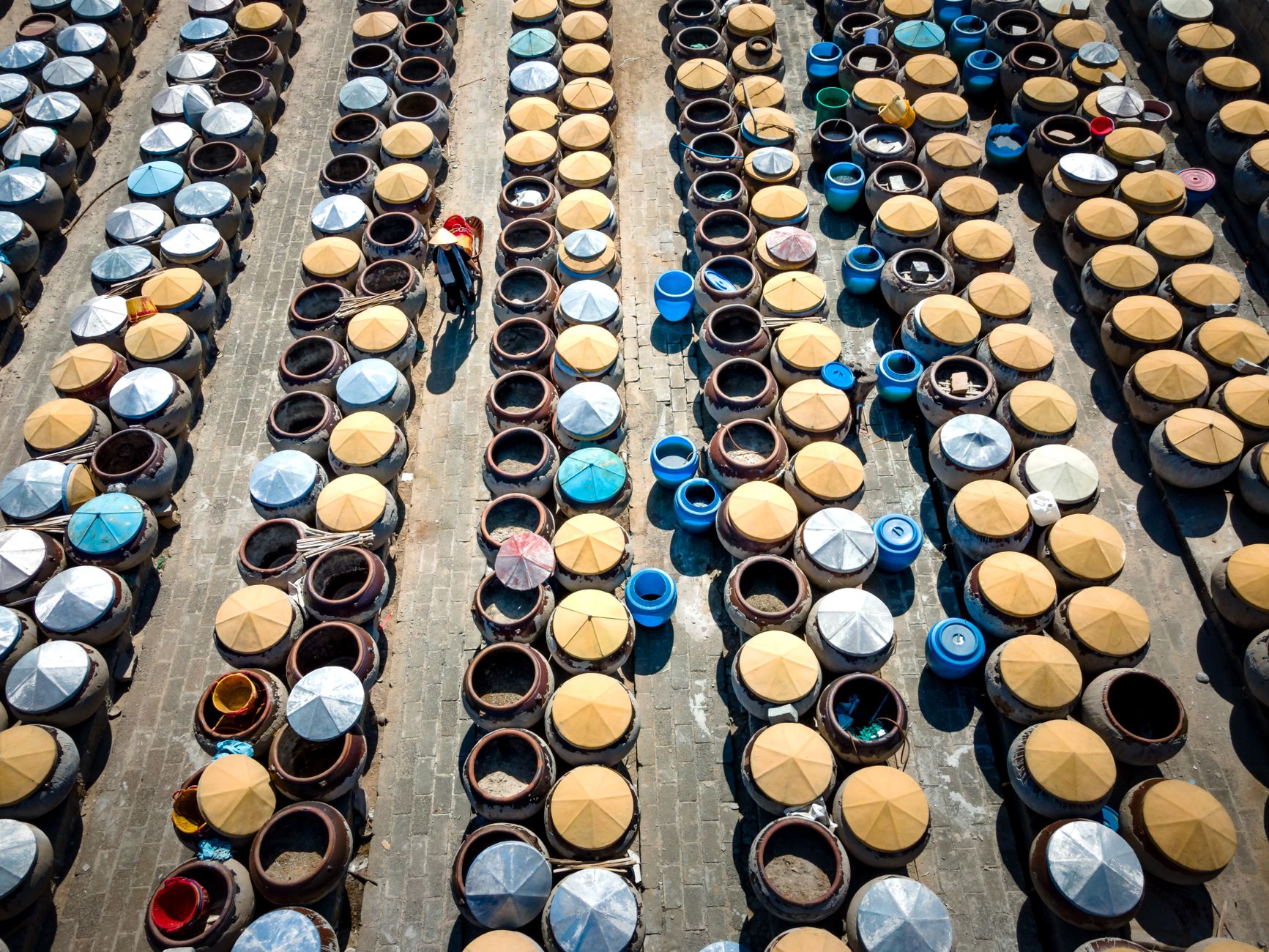
Shandong condiments quietly feed half of China — but national brands are scarce
Shandong's hidden empire
Shandong province has built an industrial leviathan in sauces, vinegars and spice blends — yet much of that power is invisible to ordinary consumers. According to business database Qichacha (企查查), Shandong now hosts roughly 48,000 condiment-related firms, the most of any Chinese province, and it has been reported that the cluster produces large shares of China’s compound spice mixes, sesame oil and processed garlic products. So why can most Chinese shoppers name few Shandong brands beyond local favorites? The answer lies in a supply-chain model that favours processing, wholesale and B2B scale over national consumer-brand building.
Two towns that tell the story
Two local stories explain the province’s strength and its limits. Yang’an Town (杨安镇) near Dezhou became “China’s condiment town” by aggregating purchased raw spices and building a massive processing and distribution hub; reportedly its factories account for more than 40% of the national compound-spice market and exports reach scores of countries. In Qingdao’s Jiaozhou, Yujia Village (于家村) is the end of the “chili universe”: the village and nearby markets handle some 120 million kg of dried chili a year and have driven standard-setting for export-grade peppers. Both places thrived not because they control raw inputs locally, but because they mastered procurement, contract farming, processing standards and logistics — the downstream value-add where money concentrates.
Brands, bottlenecks and geopolitics
Shandong is home to household names in the regional trade: Xinhe (欣和), Lianhua (莲花控股), Yutu (玉兔), Cuizi (崔字牌), Yunde Foods (云德食品) and Richen (日辰股份) are all major players in different niches. Yet southern firms such as Haitian (海天), Chubang (厨邦) and Qianhe (千禾) have encroached on northern shelves, taking advantage of national distribution networks and brand recognition. The industry also faces international headwinds: rising food-safety standards, export inspections and shifting trade policies can quickly affect margins for exporters who depend on global buyers. Reportedly, efforts such as “order planting + unified standards” in Jiaozhou aim to lock supply quality, but structural consolidation appears inevitable.
Outlook: consolidation over celebrity
Shandong’s condiment map shows scale and depth — fermentation traditions, century-old makers like Dexinzai (德馨斋) and industrial champions — but not a surfeit of national consumer icons. The province will likely remain China’s processing and export backbone for condiments, yet converting that industrial heft into household-name brands requires new distribution strategies, marketing muscle and product premiumization. Can Shandong’s sauce culture turn its century-old craftsmanship into modern brand power? The next wave of mergers, quality standardization and consumer-facing investment will decide whether the province continues to be the nation’s pantry — or just its factory.