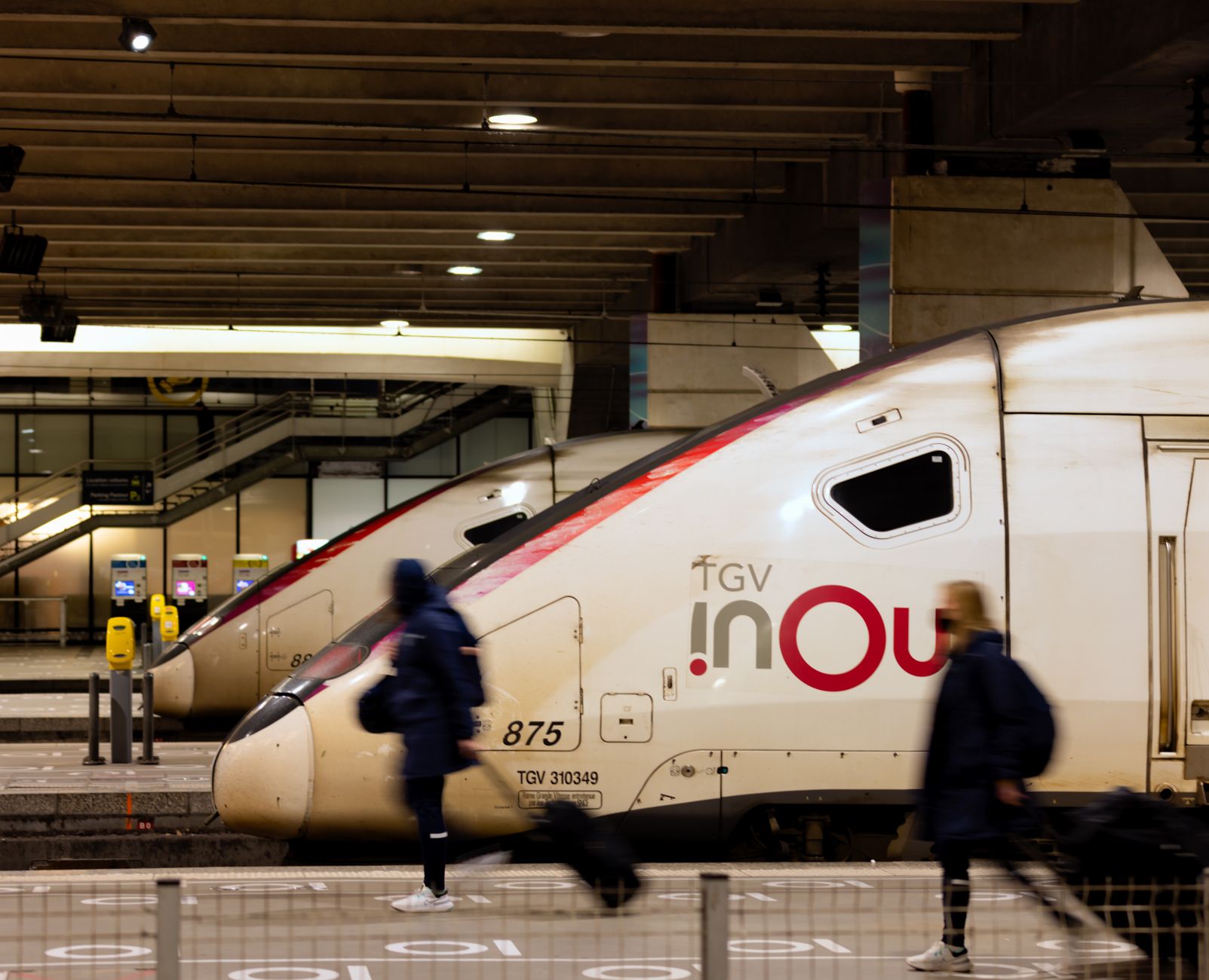
France's new-generation TGV-M double-deck high-speed train debuts, top speed 320 km/h
Overview
It has been reported that SNCF (法国国家铁路公司), in partnership with Alstom (阿尔斯通), has won operating approval for its new-generation TGV‑M double-deck high‑speed train, reportedly capable of reaching 320 km/h. Built on Alstom’s Avelia Horizon platform, the train is slated for use on Eurostar routes that link the United Kingdom with mainland Europe. Faster and roomier — but what does that mean for cross‑Channel travel?
Technical details
The TGV‑M uses a power‑concentrated design and the traditional TGV articulated “Jacobs” bogie arrangement, in which adjacent carriages share a bogie; that makes in‑service shortening or lengthening of individual trainsets impractical, although capacity can be increased by coupling two trainsets together. It reportedly supports both 1.5 kV and 25 kV electrification, offers a double‑deck layout with about 740 seats (roughly a 20% capacity gain) and claims a 20% reduction in energy consumption versus predecessors. Onboard connectivity will include 5G‑based Wi‑Fi, and it has been reported that commercial service could begin in August or September.
Context and implications
For Western readers: Eurostar is the key operator of high‑speed cross‑Channel services, and new rolling stock matters not just for comfort but for capacity and emissions. The TGV‑M arrives as European rail operators push to shift journeys from air to rail to meet climate targets and to relieve congestion on busy trunk routes. Operationally, the jacobs design preserves TGV’s safety and ride characteristics but reduces flexibility — a trade‑off between efficiency and operational modularity. Will more seats and faster schedules persuade travelers to leave their planes at the airport? That is the calculation facing operators as these trains roll out.