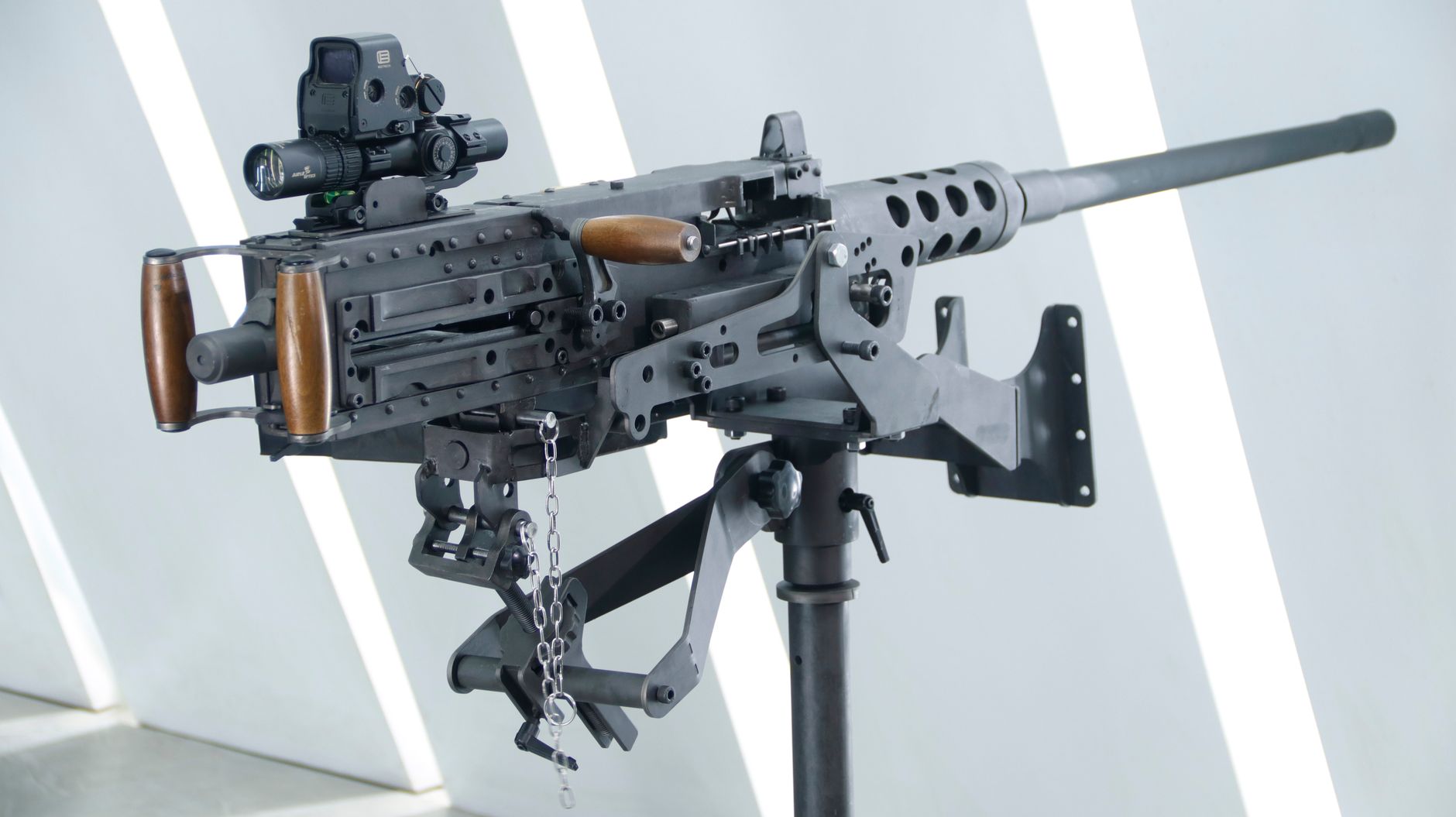
China unveils handheld electromagnetic gun that “fires” without shells or recoil
New weapon shown by state media
China Ordnance Equipment Group Construction Industry (中国兵器装备集团建设工业) has publicly demonstrated a next‑generation electromagnetic launcher — dubbed the "威力可控电磁发射器" — it has been reported that CCTV (中央电视台) showed the device and that it completed related tests. Unlike conventional firearms that rely on gunpowder, the system reportedly uses battery energy and multiple staged electromagnetic coils to accelerate projectiles, producing no muzzle flash, little noise and no ejected casings. The demonstrator reportedly pierced a wooden board and left dense impacts on paper targets.
Design and claimed performance
The launcher’s appearance is modular and boxy, with a barrel of roughly 30 cm, a mid‑mounted grip and a rear magazine; an onboard display reportedly shows battery level, remaining rounds and firing mode. Reportedly the updated design delivers higher muzzle velocity and adjustable power, and testers felt almost no recoil. IT之家 reported theoretical rates of fire between 1,000–2,000 rounds per minute, and commentators framed the system as suitable for non‑lethal or less‑lethal applications because velocity can be tuned to reduce penetration.
Why this matters — batteries, rules and export controls
For Western readers: electromagnetic launchers (coilguns/railguns) have long been pursued as an alternative to chemical propellants, but practical deployment depends on compact, high‑power energy storage and advanced power electronics. It has been reported that China’s advances here are tied to improvements in battery energy density. That link is politically salient: high‑end batteries, power semiconductors and precision components are already subject to export controls and sanctions in some jurisdictions, which could shape how quickly such systems proliferate or are integrated into policing and military roles.
Open questions and implications
The public footage and accompanying claims are notable but many technical details remain scarce. Could such devices displace traditional small arms in some scenarios? Reportedly they may be useful where stealth, reduced over‑penetration and electronic control are priorities, but their battlefield utility will hinge on reliable high‑density power, cooling and durability under sustained use. As with other dual‑use Chinese military tech, these developments will raise policy questions in capitals watching for shifts in both domestic public security tools and future battlefield capabilities.