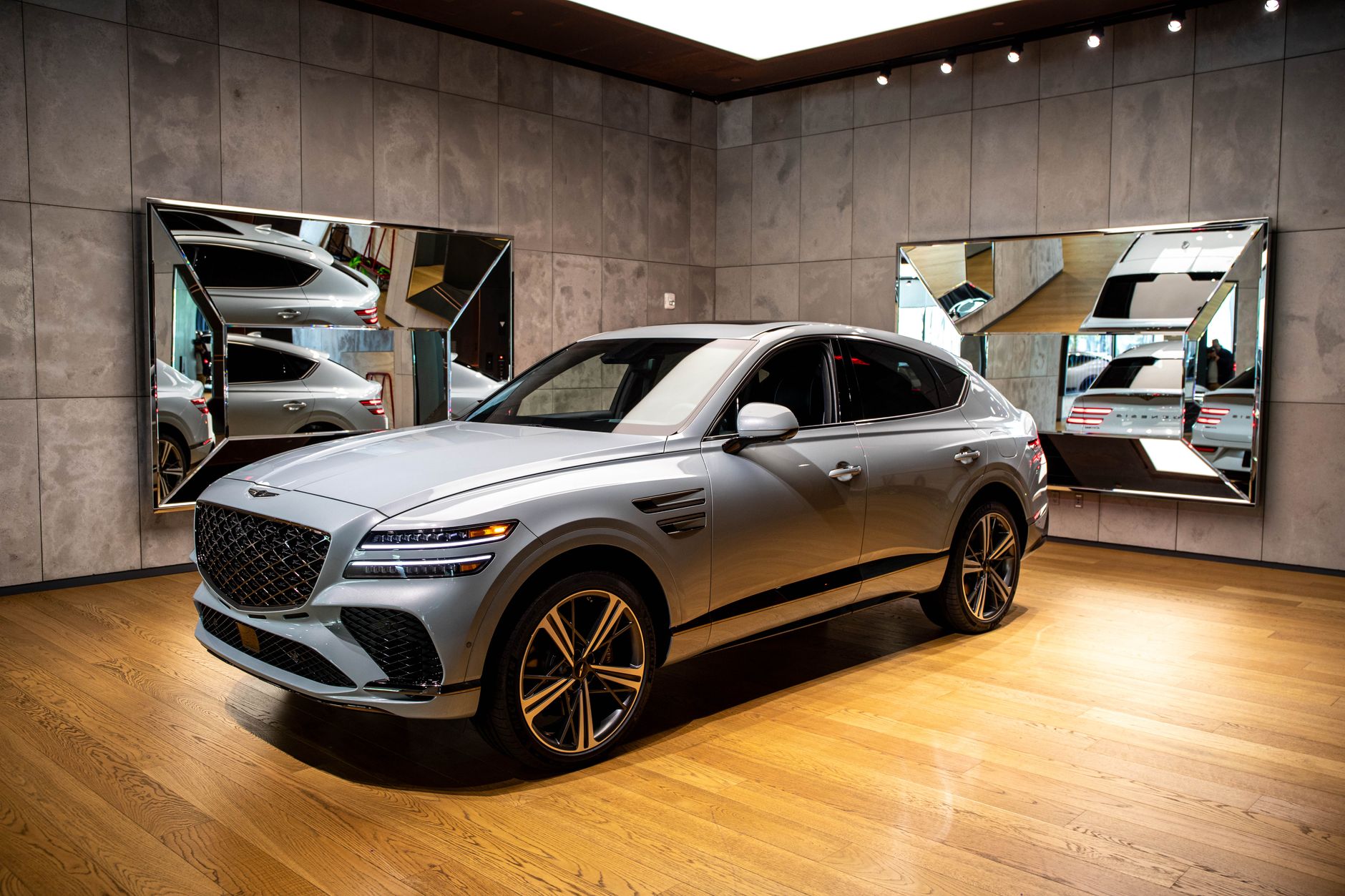
HarmonyOS Smart Driving Shangjie Z7 / Z7T open for pre‑order — prices start at ¥229,800 / ¥239,800
Launch and pricing
Huawei (华为) onstage at its spring product event unveiled the first coupe and estate from its HarmonyOS Smart Driving (鸿蒙智行) sub‑brand: the Shangjie Z7 (尚界 Z7) and Shangjie Z7T (尚界 Z7T). The two models are now available for pre‑order with starting prices of ¥229,800 for the Z7 and ¥239,800 for the Z7T, positioning them in the mid‑to‑premium EV segment of China’s crowded electric vehicle market.
Design and cabin
The Shangjie Z7 measures 5,036 × 1,976 × 1,465 mm with a 3,000 mm wheelbase and carries an aggressive “diamond‑cut” styling language. Exterior highlights include a 408‑point laser headlamp motif, auxiliary blue driving indicator lights on the headlamps, mirrors and tail, an active grille and illuminated badge, plus a “Nebula Scroll” tail‑light assembly studded with 13,000 faux‑diamond elements creating a reported 91,000 reflective facets. Inside, the car features a four‑dimensional adaptive screen that turns toward occupants, a “HarmonyOS ALPS” health cabin, passenger zero‑gravity seat and multiple ambient colour schemes.
Powertrain, range and driver assistance
Huawei’s pitch is vertical integration: the Shangjie line ships with five flagship Huawei platforms including Huawei ADS 4.1 driving system, the Huawei Whale (巨鲸) 800V high‑voltage battery architecture, an 896‑line dual‑path image‑grade LiDAR, HarmonyOS cockpit and the new Huawei TuLing (途灵) platform. Battery options are an 81 kWh or 100 kWh Whale pack. Single‑motor cars are rated at 264 kW (top speed 220 km/h); the dual‑motor “Ultra” pairs a 170 kW front unit with a 264 kW rear unit and is listed with top speeds in the 239–242 km/h range. It has been reported that under CLTC testing the longest range reaches up to 905 km.
Why it matters
Can Huawei convert software and telecom muscle into an EV franchise? The Shangjie launch underscores Beijing‑based tech firms’ move from smartphones and cloud services into cars as hardware‑software platforms, a trend intensified by years of US export controls and chip restrictions that have pushed Chinese players toward in‑house systems and domestic supply chains. Whether buyers will pay a premium for HarmonyOS integration and Huawei’s sensor stack remains the central question as the company competes with established EV makers and other domestic entrants.