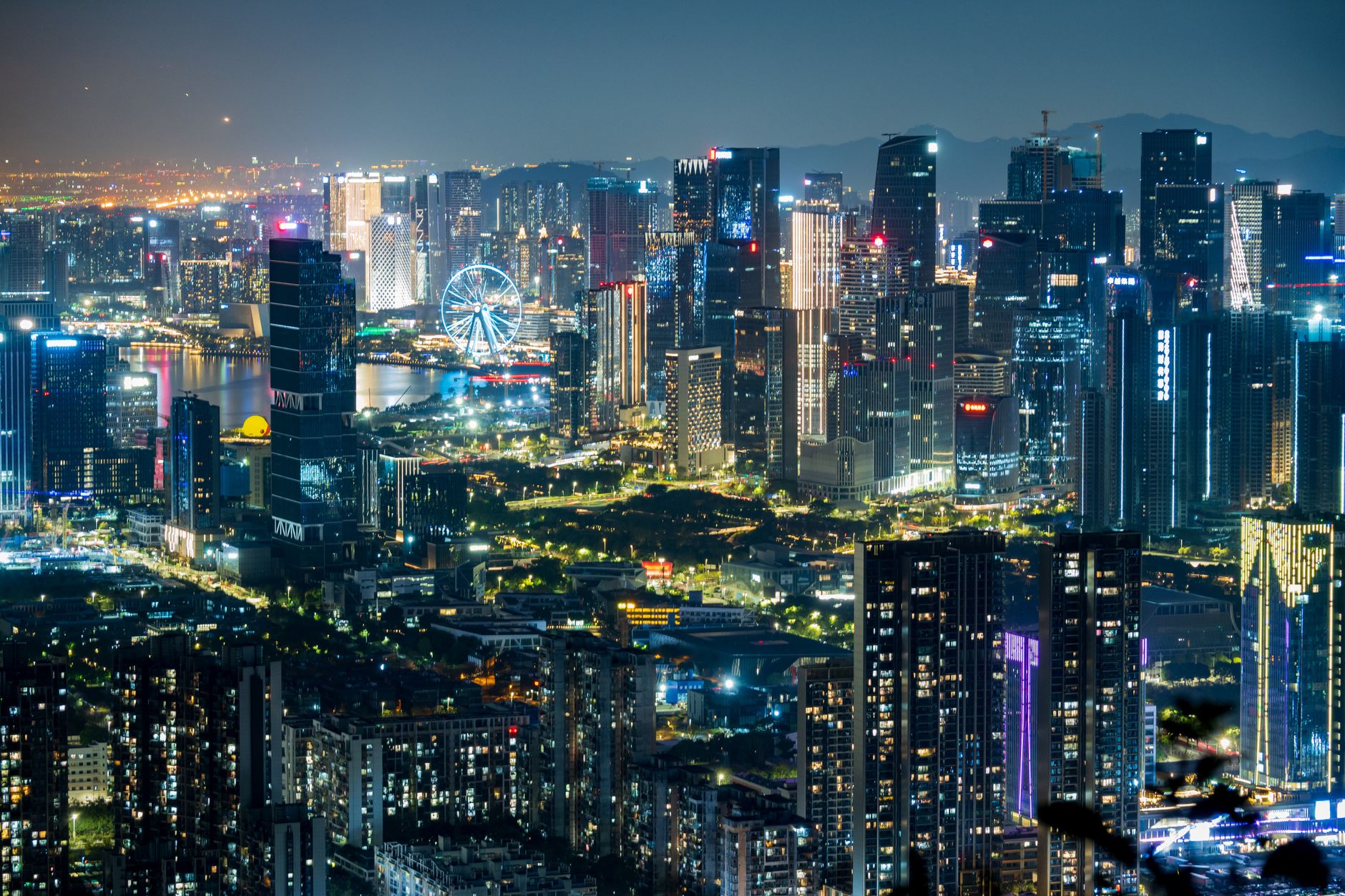
Latest Urban Population Map, Growth Champion is This One
Shenzhen tops the 2025 city growth rankings
It has been reported that Shenzhen (深圳) again led China’s urban population gains in 2025, with a resident population of 18.2485 million at year-end — an increase of 259,000 from 2024 and the largest net gain among major cities that have published data. This marks Shenzhen’s fourth consecutive year of more than 100,000 new residents and caps a decade (2010–2020) in which the city added 7.136 million people, underscoring its long-term magnetism for workers and migrants.
Pearl River Delta growth driven by births and migration
Dongguan (东莞) and Guangzhou (广州) rounded out the top three. Dongguan’s growth was particularly explosive: it reached 10.8004 million residents (+229,600) in 2025, while Guangzhou added 123,000. It has been reported that Guangdong province remained China’s “birth champion” in 2025 with about 1.003 million births, but the big story in the Pearl River Delta is mechanical growth — net in-migration. For example, Dongguan’s natural increase was only about 21,400 last year, while net inflow accounted for roughly 208,200 of its population gain, aided by local policy relaxations on talent household registration and the area’s proximity to Shenzhen and Guangzhou. According to Yang Chenggang (杨成钢), vice‑president of the Chinese Population Society, industry pull and commuting connectivity in the Greater Bay Area (about 1.29 million cross‑city commuters in 2024) help explain why secondary Pearl River Delta cities are growing so fast.
Middle and western provincial capitals remain important growth engines
Stretching the lens to five years shows a different pattern: mid‑western provincial capitals — Wuhan, Changsha, Hefei, Guiyang and others — have repeatedly topped annual增量 lists, sometimes eclipsing larger eastern coastal cities. Reportedly, cities such as Wuhan and Hefei attracted large inflows after the pandemic by creating jobs in new industries; Guiyang and Changsha showed similarly strong draws in other years. That broader trend reflects a rational calculus by young, skilled migrants: provincial capitals often offer lower living costs than first‑tier cities while still providing superior jobs and public services within their provinces.
Policy test: can “grab, keep, raise” talent deliver sustainable growth?
China’s urban population story is playing out against structural headwinds — low fertility and an aging population — and a policy push since the 14th Five‑Year Plan to loosen hukou and talent barriers. Cities are moving from “抢人” (grab people) to “留人” (keep people) and even “育人” (raise people) with targeted subsidies, housing and credit measures; Chengdu’s heavy incentives for tech talent and Zhengzhou’s pledge to retain 200,000 young people are examples. Several cities are now on the cusp of the 10‑million resident threshold — Wenzhou, Ningbo, Foshan, Nanjing and Jinan among them — but can these short‑term incentives translate into long‑term urban dynamism and resilience as global trade tensions and economic rebalancing reshape opportunities? That is the test policymakers face.