Energy Trump Card: China’s Coal-to-Chemicals Industry Defying Expectations
Strategic buffer as seaborne oil falters
China’s coal-to-chemicals sector has quietly become an energy-security trump card just as disruptions in the Middle East choke global oil supply. It has been reported that from March 1–13 only 77 ships transited the Strait of Hormuz compared with 1,229 in the same period last year — a 94% plunge — and, reportedly, JPMorgan warned in early March that some Middle Eastern producers’ forced-shutdown warning time has shortened from about 25 days to roughly three days because of storage constraints. When seaborne oil flows stall, who can keep factories running and chemicals flowing? China’s coal-based industry can.
Hard engineering, decades-long push
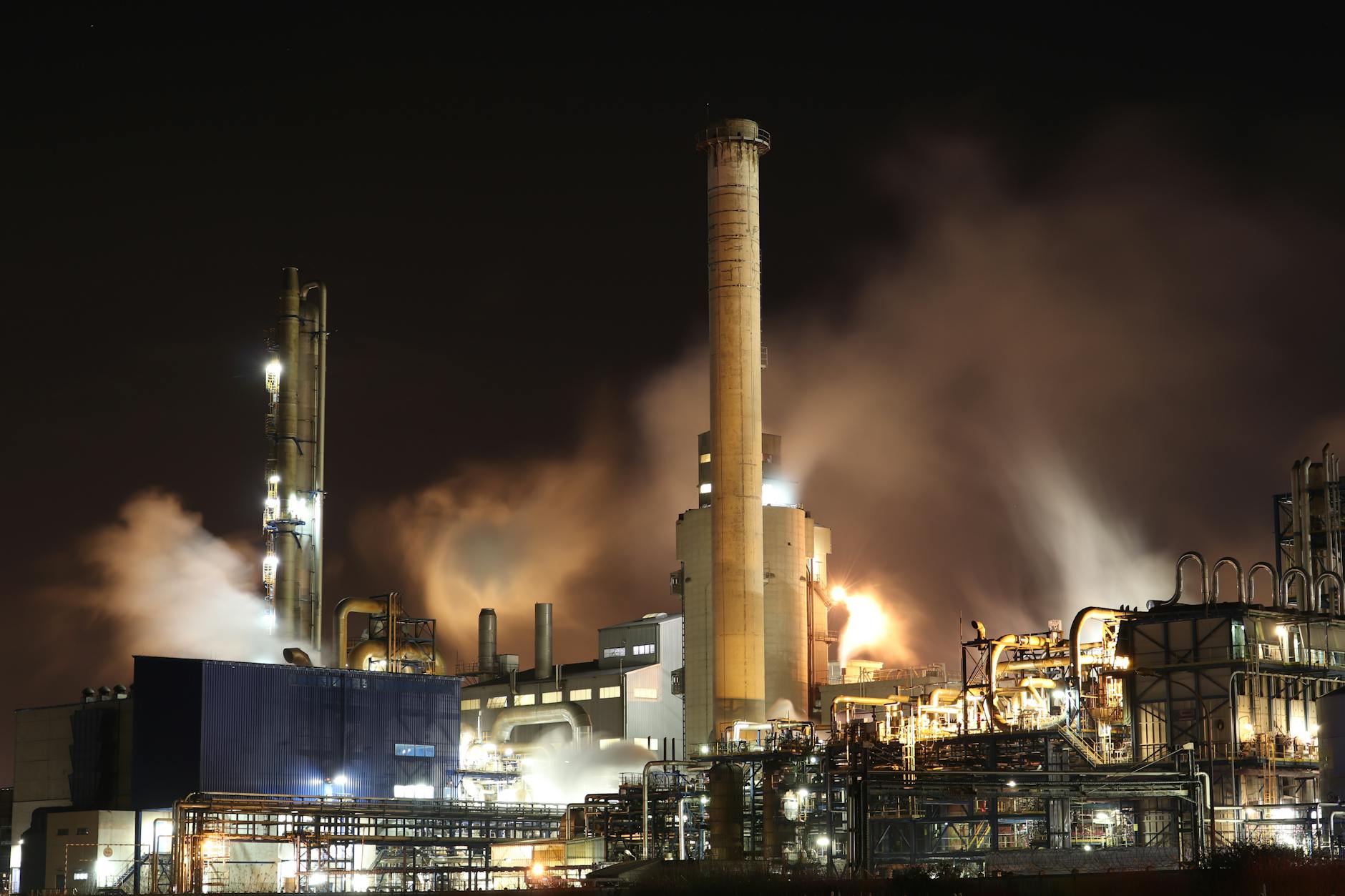
Converting coal into fuels and petrochemicals is not glamorous. Coal is a “low-H/C, high-molecular” feedstock that must be gasified into syngas and then reassembled via Fischer–Tropsch and other catalytic routes — a process that demands extreme temperatures, specialised reactors and proprietary catalysts. China’s entry into this field has been industrial-scale and state-led: projects such as Shenhua (神华)’s Ordos direct liquefaction and Ningxia Coal Industry (宁煤)’s 4-million-tonne indirect liquefaction marked the first leaps, and the Chinese Academy of Sciences’ Dalian Institute of Chemical Physics (中国科学院大连化物所) has been central to the long R&D arc. It has been reported that many elements that were once imported or under foreign dominance have been indigenised, from gasifiers to FT catalysts.
Scale, economics and geopolitical logic
The numbers matter. In 2025 China produced about 216 million tonnes of crude but imported roughly 578 million tonnes — imports accounted for roughly 76% of apparent consumption. By contrast, China’s coal-to-chemicals system has an annual conversion capacity of about 320 million tonnes (2.8 billion tonnes standard coal converted in 2024), equivalent to roughly 140 million tonnes of oil substitution. Coal-to-oil capacity reached 8.23 million tonnes/year, coal-to-gas 7.45 billion m3, and coal-to-olefins 13.42 million tonnes/year, with coal-derived ethylene and propylene now representing material shares of national capacity. Economically, high oil prices make coal routes profitable: oil above $80/bbl favours coal chemistry; under $70/bbl the cost disadvantage reappears. With oil at about $98/bbl amid Iran tensions, coal chemistry is in a sweet spot — and less vulnerable to sanctions or tanker interdiction because feedstock is domestic.
Trade-offs and outlook
That strategic value comes with trade-offs. Coal-to-chemicals is capital- and energy-intensive and raises carbon and local pollution challenges that sit uneasily with Beijing’s climate targets. Profitability is cyclical and tied to volatile oil markets; coal-derived olefins have seen margins compress even as coal-to-oil and coal-to-gas swung from losses to profits in recent years. Still, for Western readers used to hearing only about Chinese advances in AI and chips, the lesson is blunt: China has spent decades building heavy industrial resilience — a “hard” form of energy security that matters when geopolitical shocks interrupt the petroleum lifeline.