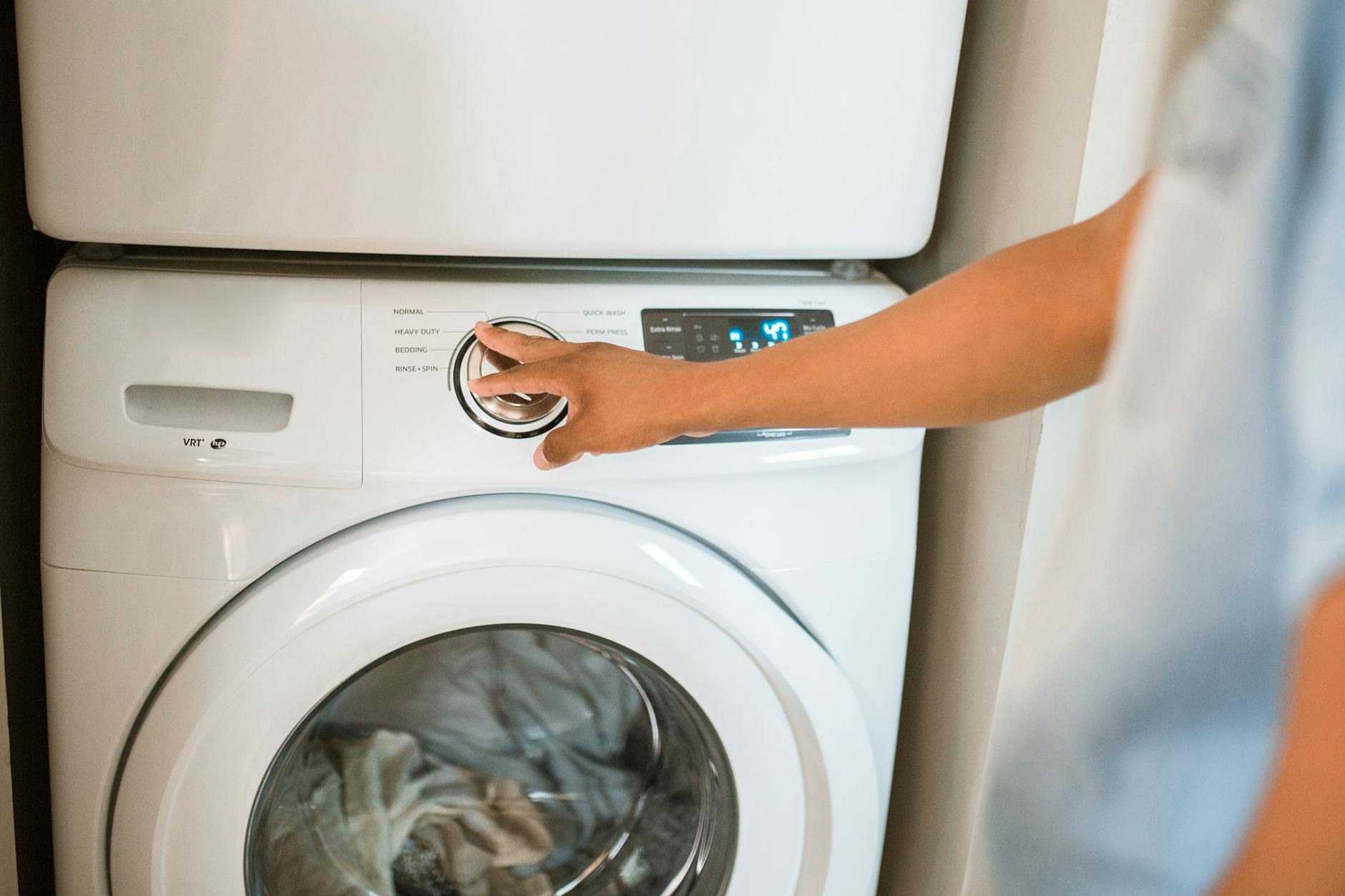
Household Washing Machines Are Becoming More and More Like Beehives
Trend: more tubs, more separation
Multi‑tub washing machines — models with three, four or even five independent drums — are moving from niche curiosity into mainstream Chinese living rooms. Why? Many urban households no longer want socks, underwear, baby clothes and elderly family members' garments tumbling together. The demand for “separate wash” has become a social media-ready lifestyle cue: photos of a balcony humming with multiple small drums have become a kind of status symbol for what Chinese consumers call “精致懒” — people who want convenience without compromising perceived hygiene.
Who’s buying, and what it costs
These machines are not cheap. Entry multi‑tub models now commonly start around RMB 3,000–5,000, mainstream wash‑and‑dry variants sit in the RMB 5,000–8,000 band, and high‑end four‑ or five‑tub flagships can exceed RMB 8,000. One buyer reported paying just over RMB 10,000 for a five‑tub stack with independent wash‑and‑dry functions for each drum. It has been reported that Xiaomi (小米) played a catalytic role in the segment: after a high‑profile social media exchange with founder Lei Jun, Xiaomi launched a dual‑zone model priced at about RMB 4,999 and reportedly sold out thousands in pre‑sales — a classic example of how price pressure and brand cachet reshape premium features into mass offerings.
Market shape and players
The market is consolidating around a “one‑big, many‑small” structure. Haier (海尔) and its premium Casarte (卡萨帝) sub‑brand are seen as early leaders, with Haier’s multi‑tub models among the best sellers; Midea (美的) and Little Swan (小天鹅, Midea’s label) chase with value and mid‑range tech, while Hisense (海信), Xiaomi (小米) and TCL (TCL) carve out segments. Industry estimates put multi‑tub sales at roughly 3–4 million units for 2025, under 10% of the total washer market but up from under 5% a few years ago. By contrast, integrated washer‑dryer units remain dominant in volume — reportedly selling more than 12 million units in 2025.
Bigger picture: lifestyle, resources and supply chains
What started as a hygiene quirk now touches economics, design and supply chains. Chinese appliance makers are exploiting a large domestic market and fierce price competition to move features downmarket, even as consumers judge products by noise, energy and water efficiency — manufacturers increasingly advertise inverter motors and independent cycles to answer those concerns. Against the backdrop of broader U.S.–China tech tensions and a push to localize more of the electronics supply chain, home appliance firms are racing to turn differentiated hardware into fast‑moving consumer hits. But is stacking half a dozen drums on a balcony a sustainable culture of consumption — or the next normal for metropolitan households trying to square convenience, cleanliness and cost?