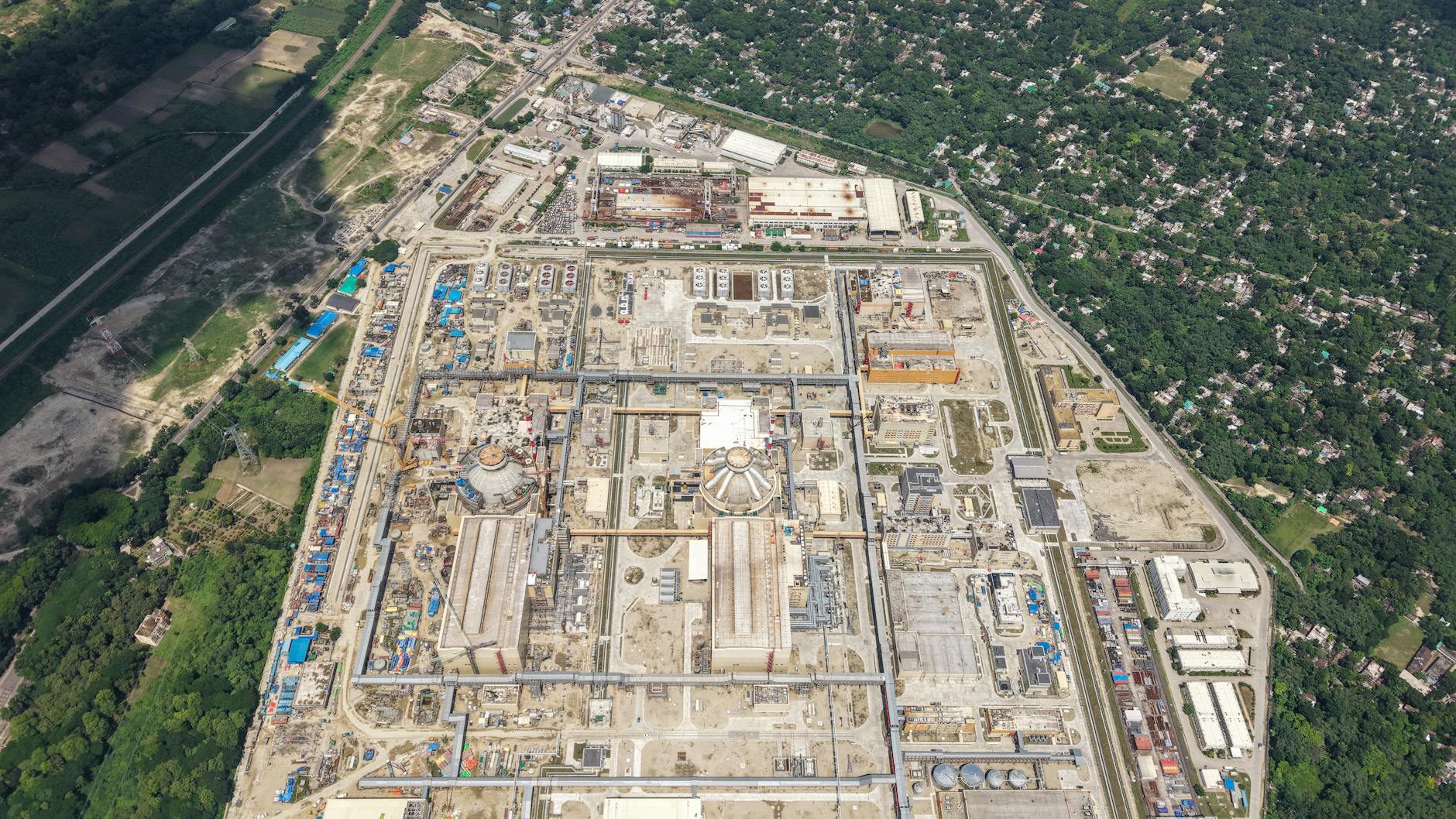
By 2025, China’s industrial electricity use will be more than six times the United States’, data shows
Key finding
It has been reported that China’s second‑industry (industrial + construction) electricity consumption reached 6.6366 trillion kWh in 2025, according to figures cited from the National Energy Administration (国家能源局). Using historical shares from the China Statistical Yearbook (中国统计年鉴) — where industry accounted for roughly 98% of second‑industry consumption in recent years — that implies China’s industrial sector alone used about 6.5 trillion kWh in 2025. By contrast, the U.S. Energy Information Administration (EIA) estimates U.S. industrial electricity use at roughly 1.04 trillion kWh in 2025, yielding a ratio of about 6.2 to 1 in favour of China.
Why this matters
Numbers like these quantify what observers have long sensed: China remains the world’s factory not just in name but in energy throughput. More power consumed in industry reflects large‑scale steel, chemicals, non‑ferrous metals and basic manufacturing capacity — the energy‑intensive backbone of global supply chains. Does higher industrial electricity automatically mean more advanced manufacturing? Not necessarily. But it does signal scale, capacity to absorb industrial load, and potential leverage in geopolitically sensitive supply chains such as battery, solar, and basic semiconductor fabrication, sectors where energy availability matters.
Geopolitical and economic context
This comparison sits against broader trends: Japan and Germany have seen long‑term declines in power consumption as economies shift toward services, while U.S. residential electricity makes up a larger slice of its grid mix. The U.S.–China industrial gap has implications for trade policy, export controls and strategic decoupling debates — especially as Western sanctions and supply‑chain restrictions push governments to weigh energy and raw‑materials security alongside high‑end technology controls. It has been reported that China’s domestic demand—reflected in rising residential and industrial electricity use—also feeds its internal growth and urbanization story.
Caveats and outlook
Electricity numbers are blunt instruments. They tell you how much energy flows through an economy, not directly the technological sophistication of output, productivity per kWh, or environmental cost. China’s heavy industrial consumption coexists with rapid gains in electrification, variable renewables on the grid, and tight local emissions targets. Policymakers and investors watching the data should ask not only who uses more electricity, but how efficiently it is used, what fuels it, and how resilient the grids are under growing loads.