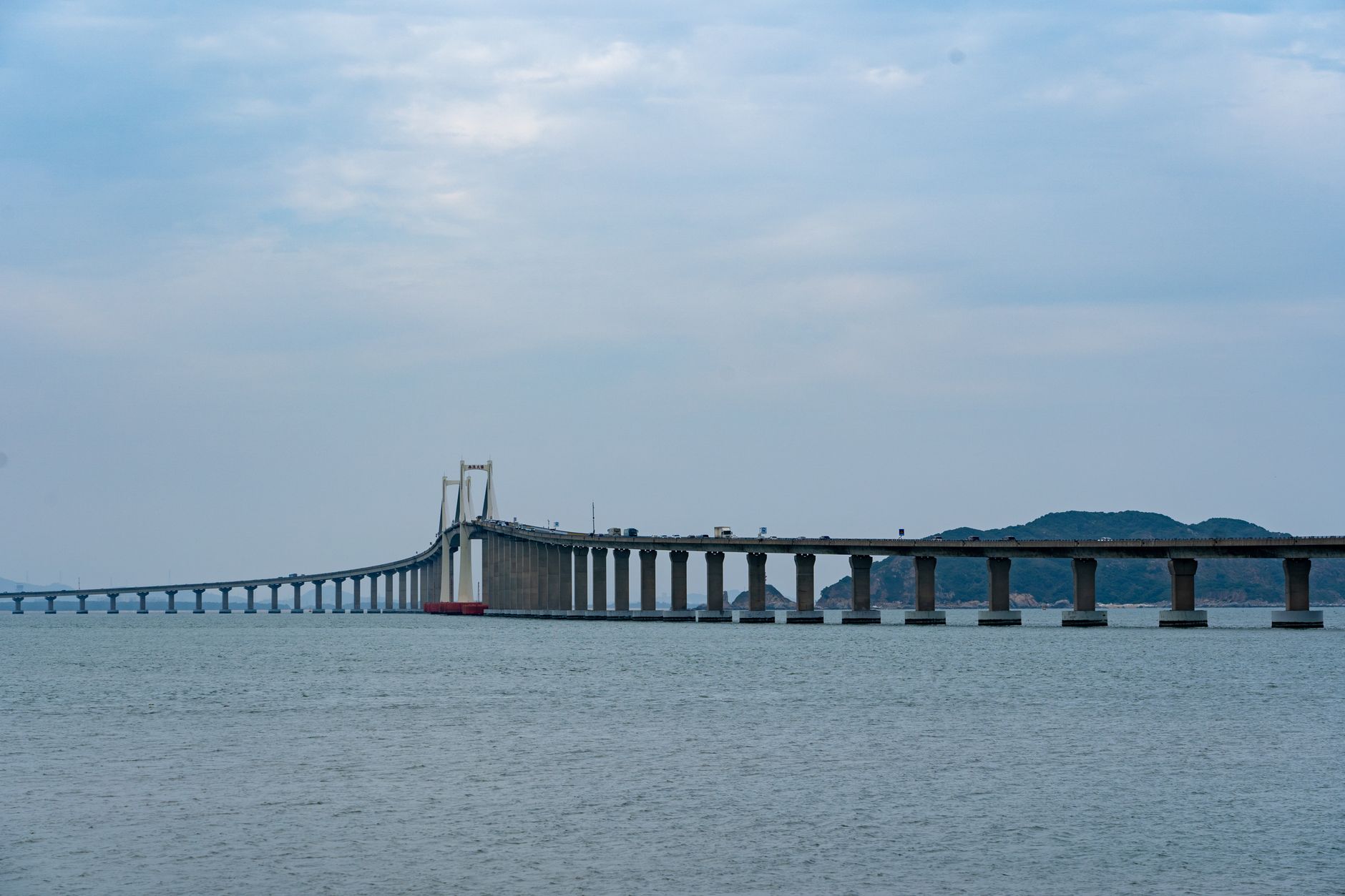
China's longest cross‑sea bridge is coming — Hangzhou Bay set for an O‑shaped ring
A new super‑project for the Yangtze Delta
It has been reported that Beijing has moved a new Shanghai–Ningbo (沪甬) cross‑sea corridor into national planning, a project reportedly worth more than CNY100 billion and now one step from formal approval. If built, the route would be a road‑and‑rail bridge/tunnel across Hangzhou Bay that bypasses the existing 2008 Hangzhou Bay Bridge (杭州湾跨海大桥), closing the bay’s current “C”‑shaped road network into an “O”‑shaped loop and sharply shortening journeys between Shanghai and Ningbo.
Design, travel times and immediate impact
Planners reportedly intend a dual‑use corridor with both expressway and high‑speed/commuter rail. Highway travel could fall to roughly an hour; high‑speed rail would reportedly push Ningbo into a “half‑hour” commuter circle from Shanghai. The region already expects further gains when the Tong‑Su‑Jia‑Yong (通苏嘉甬) rail link opens, but engineers and policymakers say a direct Shanghai–Ningbo link is needed to absorb rising car flows and tighter industrial integration.
Bigger picture: ports, industry and rival super‑projects
The corridor sits alongside another mega plan — the Shanghai–Zhoushan–Ningbo (沪舟甬) cross‑sea link — also reported to have a price tag above CNY100 billion and designed to bind China’s two largest port hubs more closely. It has been reported that Ningbo’s GDP reached about CNY1.87 trillion in 2025, and the city is a national manufacturing “hidden champion,” making the case economic as well as logistical: better fixed links cement industry and supply‑chain integration with Shanghai.
Politics, feasibility and unanswered questions
Super‑projects like this have political as well as economic logic. Observers note Beijing’s emphasis on domestic circulation amid global trade frictions and technology decoupling — better internal connectivity reduces exposure to external shocks. But mega bridges face three constraints: strategic priority, technical feasibility and cost effectiveness. It has been reported that other straits — the Qiongzhou (琼州海峡), Bohai (渤海海峡) and Taiwan (台湾海峡) — remain largely unrealized in bridge form, with only limited ferry or rail‑ferry solutions described in recent five‑year planning. Will cost and engineering risks, or geopolitics, slow these ambitions? For now, Hangzhou Bay looks set to be the next test.