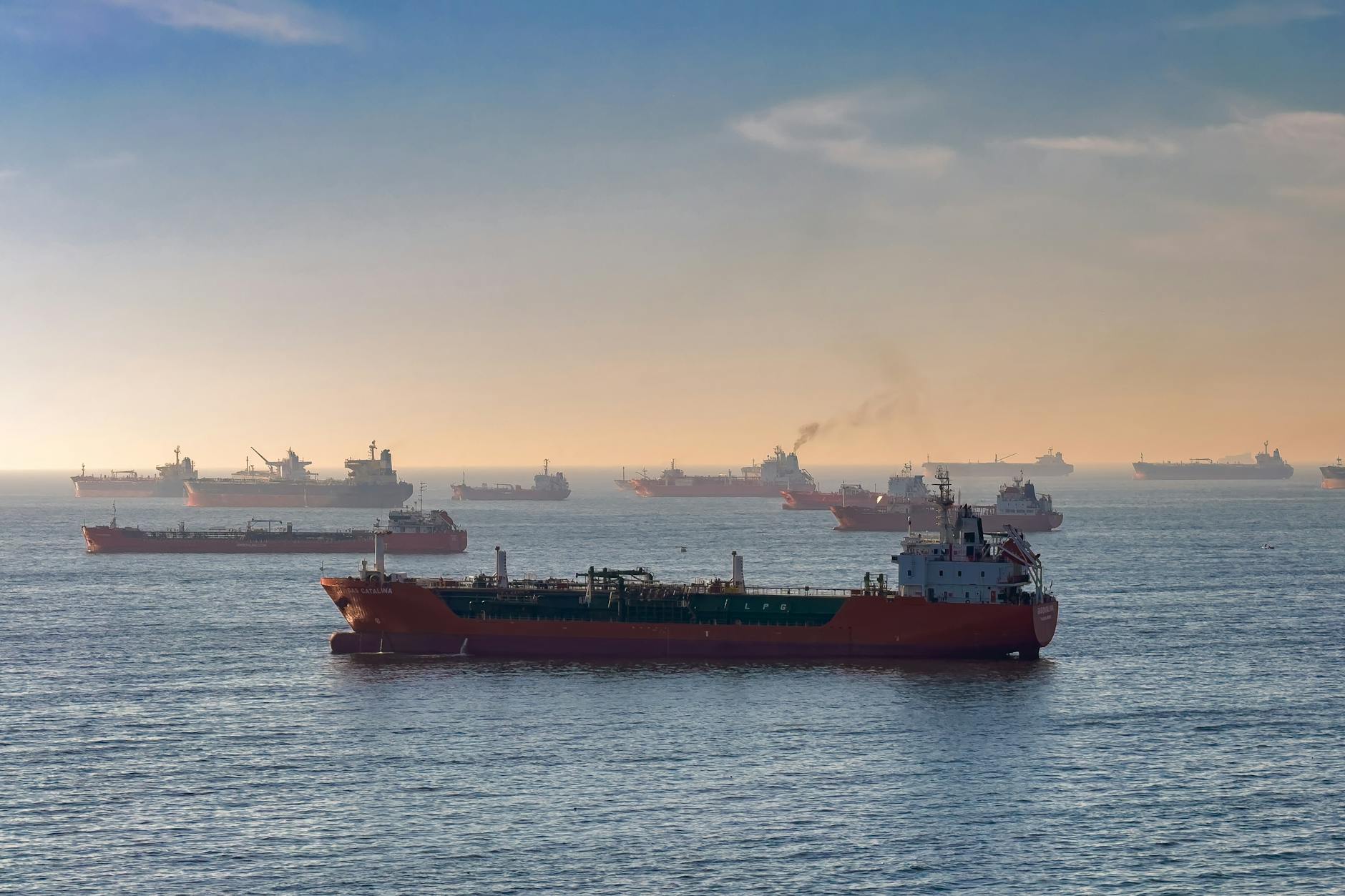
The Future of the Global Market Hangs in the Balance as Tensions Rise in the Strait of Hormuz
Escalating Maritime Crisis
In a dramatic escalation of maritime tensions, Iranian Revolutionary Guard Corps (IRGC) has reportedly issued warnings to all vessels in the Strait of Hormuz, demanding that "no ships pass through." This has led to a staggering 70% drop in traffic within just 48 hours, leaving over 150 oil and LNG tankers anchored in the Persian Gulf. The situation poses a critical risk to global oil supply chains, with Morgan Stanley projecting that if the Strait were to be fully closed, the storage capacity of the seven major oil-producing countries in the region could support operations for only 25 days before being forced to halt production altogether.
A Complex Game of Deterrence
What makes this situation particularly volatile is the nuanced strategy employed by Iran. While Iranian Foreign Minister Abbas Araghchi asserts that there is no intention to close the Strait, the IRGC's actions have effectively created a state of maritime paralysis without resorting to physical blockades. As ships receive VHF radio warnings from the IRGC, the impact on maritime insurance has already been severe, with estimates suggesting that war risk premiums could spike by 25% to 50% in the short term. This has resulted in major shipping companies like Maersk and MSC suspending operations in the region entirely.
Global Economic Implications
The implications of this crisis extend far beyond immediate shipping concerns. The Strait of Hormuz is a critical artery for global oil transportation, with approximately 20% of the world's crude passing through. Japan, for instance, sources 75% of its oil imports from the Strait, making it particularly vulnerable to disruptions. Economic analysts warn that a prolonged closure could lead to soaring oil prices, with some predictions suggesting Brent crude could reach $130 per barrel, potentially driving U.S. inflation up by as much as 6%.
Navigating Uncertainty
The next 72 hours are crucial. Will oil tankers be able to navigate safely through the Strait, or will the threat of attack deter them? The current crisis is a reminder of how quickly geopolitical tensions can disrupt global markets. As we witness this unfolding drama, the question remains: how long can the world sustain economic stability in the face of such uncertainty? With Iran's precarious balancing act between inflicting economic chaos and avoiding self-sabotage, the stakes have never been higher for the global economy.