Next Stop is Jiahe Wanggang, Passengers Please Prepare for Tears
Viral tune turns a transfer hub into a pop landmark
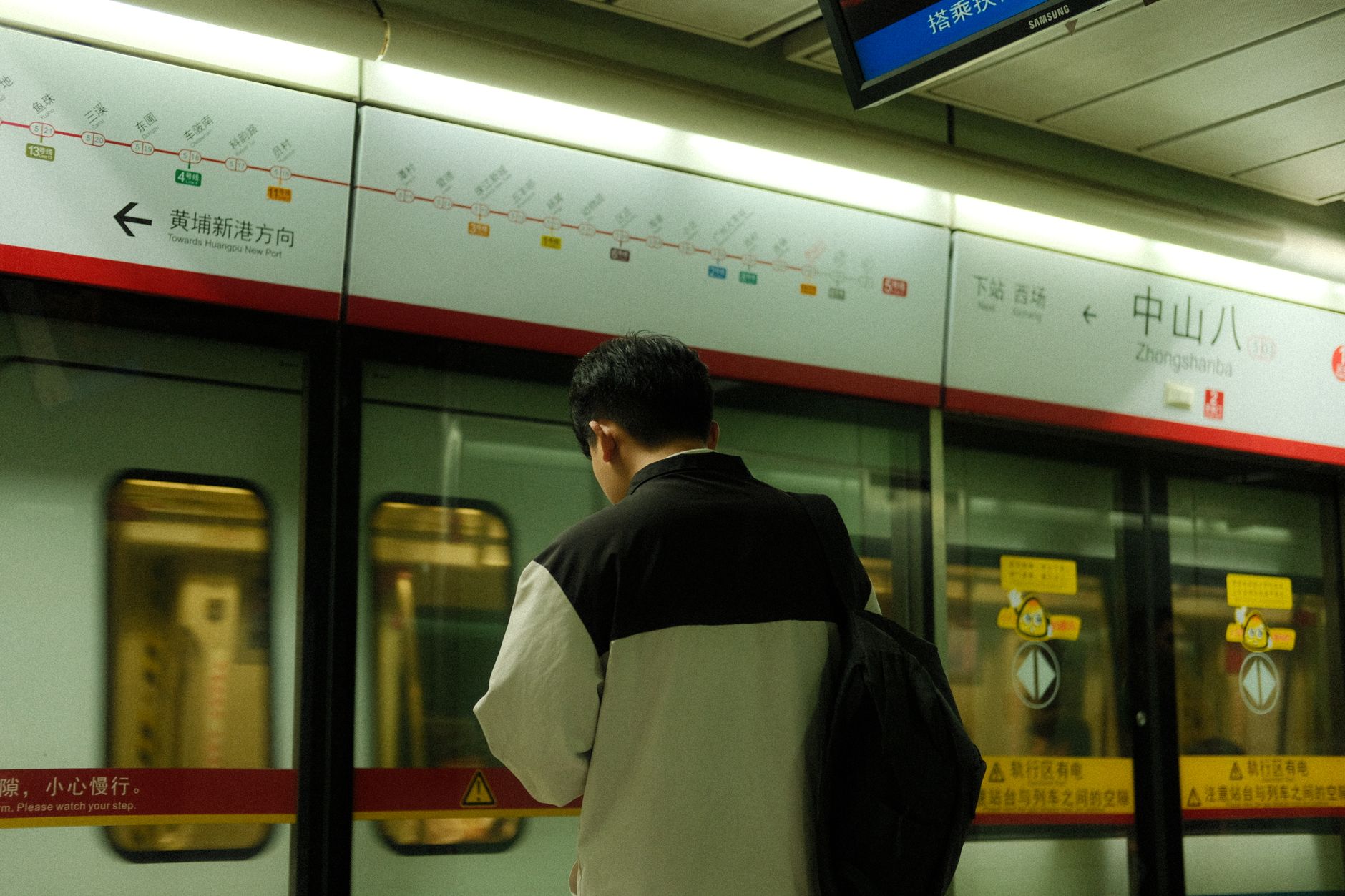
A melancholic short-video soundtrack named “Jiahe Wanggang” has turned a routine Guangzhou metro interchange into a social-media sensation. It has been reported that the song is being printed on station walls, that photo “check‑in” spots have been installed, and that the tune is being looped in the station — all turning a functional transport node into a staged moment for parting. Why would a suburban transfer stop inspire so much theatrical sorrow? Because on short‑video platforms such as Douyin (抖音), a two‑shot of a couple looking away, a single “wish you well,” and a swell of BGM has become shorthand for the end of youth and the start of separate lives.
Geography of goodbyes
Jiahe Wanggang (嘉禾望岗) is not a scenic landmark. It is a three‑line interchange — Lines 2, 3 and 14 — that sits between routes to Baiyun Airport and Guangzhou South high‑speed rail hub. The station’s role as a transfer point for commuters, airport travelers and students from outer districts has made it, in netizen shorthand, a place of mass partings. Reportedly, online communities have even grouped Jiahe Wanggang with Shanghai’s Hongqiao (虹桥), Shenzhen’s “Fanshen” (翻身) and Beijing’s Anheqiao North (安和桥北) as the four “painful” stations of China’s first‑tier cities.
Capacity crush and commuter reality
Infrastructure explains the feeling. Line 14’s connection to Jiahe Wanggang in December 2018 dramatically increased flows from suburban and university districts. Daily ridership climbed from roughly 9,000 in 2010 to about 179,200 in 2015 and roughly 384,600 by 2019, and the station reportedly set a single‑day record of 434,000 passengers on September 30, 2025. With nearby bus hubs and feeder services within 100 meters, the station funnels disparate journeys into a crowded, fast‑moving punctuation mark — not a quiet farewell. The meme says one thing; the lived commute says another: bustling, abrasive, unavoidable.
A cultural crossroads
The craze shows how China’s expanding metro networks and short‑video culture remix urban space into new kinds of public emotion. Parting rituals are amplified, scripted and monetized on apps, while millions continue to squeeze through the same doors every day. It has been reported that the affect is more performative than literal for many — yet the fixation also reflects broader dynamics: internal migration, compressed timelines for relationships, and the ways modern infrastructure doubles as a stage for personal narrative.