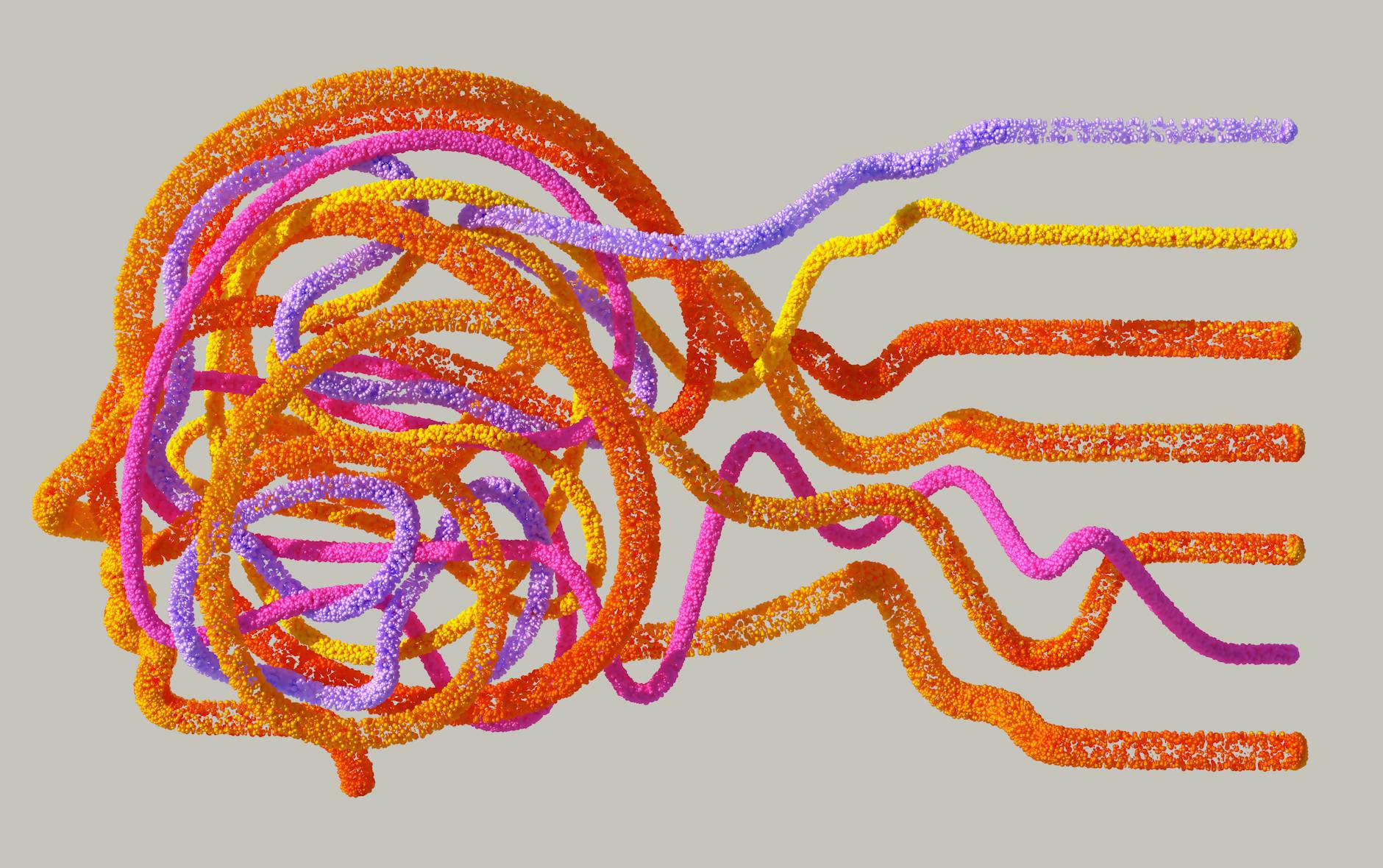
Do Agents Think Deeper? New arXiv study probes layer-wise dynamics in sequential planning
What the paper does
A new preprint on arXiv, "Do Agents Think Deeper? A Mechanistic Investigation of Layer-Wise Dynamics in Sequential Planning" (arXiv:2605.27935), asks a simple but consequential question: when language models act as autonomous agents — planning across turns, using tools, and updating state iteratively — do they make fuller use of their depth than in single-turn tasks? The authors conduct a systematic, layer-wise mechanistic analysis of agent runs to trace where key computations — planning, tool coordination, and state-tracking — appear across network depth.
Findings and methods (summary)
The paper builds on prior mechanistic work that argued many large language models underutilize depth on single-turn tasks. It extends that inquiry to multi-turn, sequential settings. The authors reportedly present layerwise metrics, ablations, and visualizations showing how representations and decision-related signals move through the network as an agent plans and acts. It has been reported that their results highlight more structured, task-specific roles for different layers during iterative planning than seen in standard single-turn evaluations.
Why this matters
If deeper layers are engaged differently in agentic, multi-step behavior, the result would reshape how researchers think about scaling, interpretability, and fine-tuning for agents versus conversational or classification workloads. That matters beyond academia: cloud providers, AI startups, and established Chinese players such as Baidu (百度) and Alibaba (阿里巴巴) racing to ship LLM-based agents care about inference cost and reliability. And there is a geopolitical angle too — hardware export controls and sanctions make computational efficiency and transparent, debuggable models strategically important for firms deploying agents under restricted access to advanced accelerators.
Next steps
The study is a preprint and should be read with the usual caveats; mechanistic claims often invite follow-up replication. Readers can consult the full paper on arXiv for experimental details, data, and code links: https://arxiv.org/abs/2605.27935. How we design and trust autonomous agents may depend on answers to the question the authors pose: do agents, indeed, think deeper?