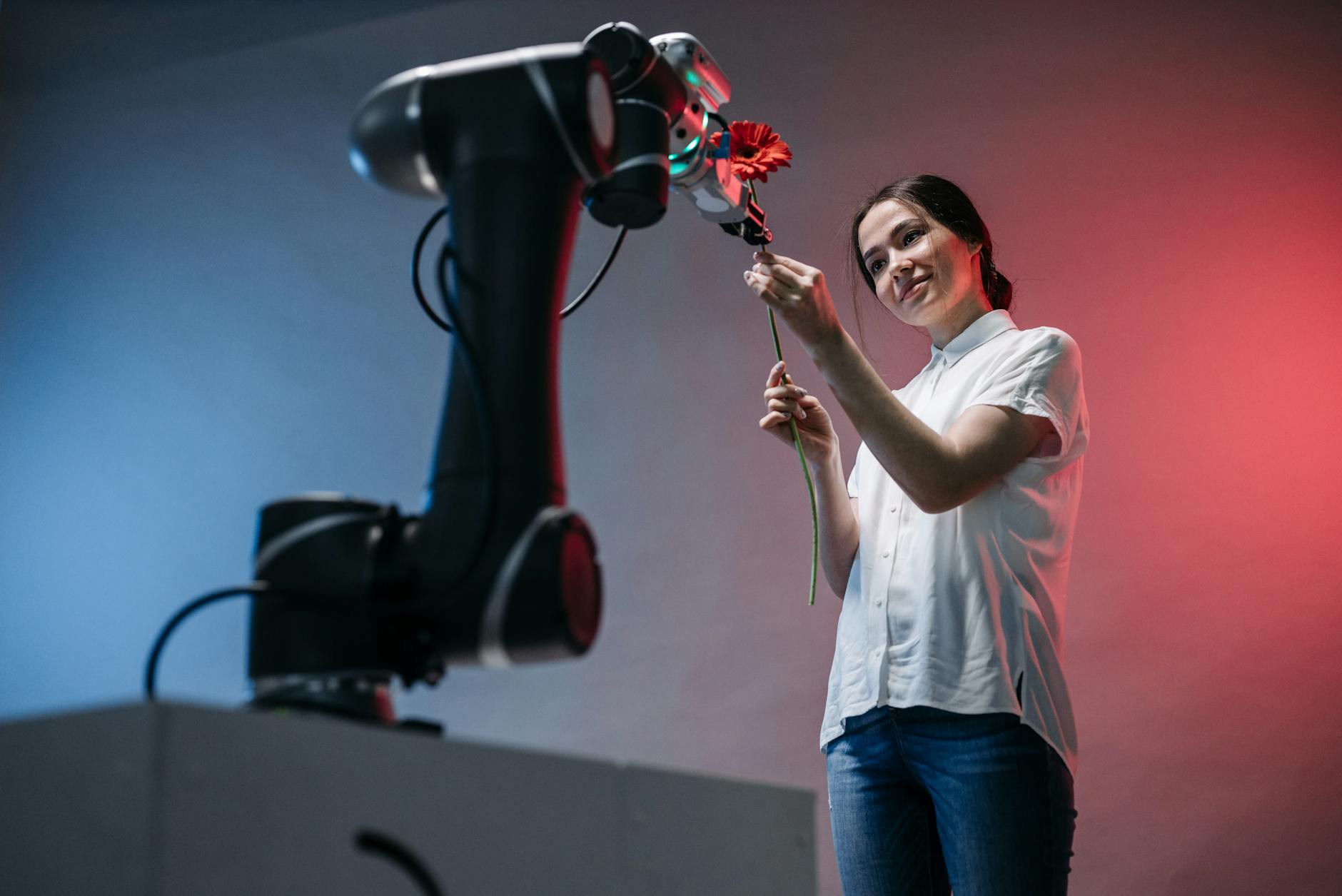
Advancing "Creative Physical Intelligence" in Large Multimodal Models, a new arXiv paper probes whether vision‑language systems can invent real‑world solutions
Large multimodal models (LMMs) have vaulted forward on perception and reasoning. But can they do more than recognize patterns and answer prompts? A new preprint on arXiv (arXiv:2605.26396) frames this gap as "creative physical intelligence" — the ability to discover visually grounded solutions in open‑ended environments rather than merely classify or describe what is seen.
What the paper argues
The authors argue that intelligence in messy, real‑world settings requires more than answering well‑posed questions: it requires identifying affordances, proposing novel interactions with objects, and sequencing multi‑step physical actions under uncertainty. Rather than claim a definitive breakthrough, the paper sets out a conceptual framework and sketches evaluation challenges for measuring whether LMMs can generate such visually grounded, creative plans. The work is primarily diagnostic and propositional — it lays out what success would look like and why current benchmarks may be insufficient.
Why it matters — and the geopolitical frame
If LMMs can reliably invent physically grounded solutions, the implications span robotics, design, assistive tech and manufacturing. That potential also intersects with global tensions: access to advanced training hardware and diverse datasets — critical for pushing LMM capabilities — has been shaped by export controls and data‑policy shifts; it has been reported that these constraints are influencing where and how multimodal research can scale. Policymakers, industry and researchers will need clearer benchmarks to assess both capability and risk as models move from recognition to creative action planning.
The preprint is available on arXiv for further reading: https://arxiv.org/abs/2605.26396.