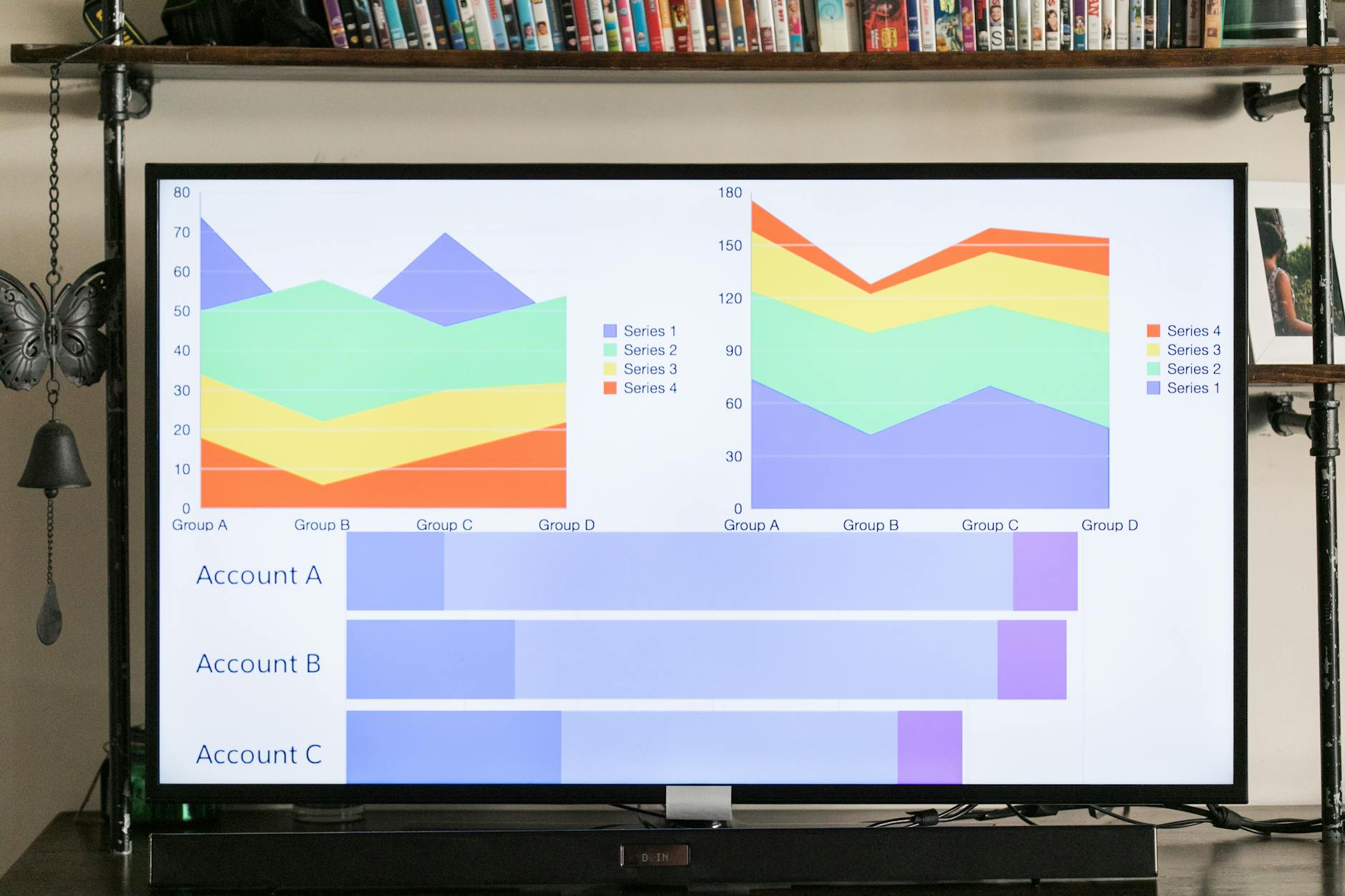
Chart‑RL: Reinforcement Learning Aims to Teach VLMs to Read Charts Better
What the paper does
A new arXiv preprint, Chart‑RL: Policy Optimization Reinforcement Learning for Enhanced Visual Reasoning in Chart Question Answering with Vision Language Models (arXiv:2604.03157v1), proposes using reinforcement learning to improve how Vision Language Models (VLMs) handle Chart Question Answering (CQA). The key claim: instead of treating chart reading as pure perception plus a one‑shot language answer, Chart‑RL trains a policy that guides multi‑step reasoning over visual elements and textual queries so the model can better integrate numeric, structural and linguistic cues.
Why charts? Bar plots, line graphs and pie charts compress numbers into visual form. They require precise counting, axis interpretation and comparison — tasks that trip up generalist VLMs focused on pattern recognition rather than symbolic reasoning. Chart‑RL frames the problem as sequential decision making: which visual region to attend next, what intermediate calculation to perform, and when to emit a final answer. The paper reportedly shows gains on standard CQA benchmarks, suggesting policy optimization can steer VLMs toward more robust, interpretable reasoning workflows.
Why it matters — and the wider context
Improved chart understanding has obvious commercial uses — finance, market research, journalism — and scientific value for extracting data from figures in papers. But there are broader implications, too. As researchers push VLMs beyond perception into reasoning, demand for more compute and specialized accelerators increases. That intersects with geopolitical issues: export controls and trade policy around high‑end chips could shape who can realistically train and deploy these advanced models. It has been reported that such bottlenecks already influence research trajectories in several countries.
The paper is a preprint on arXiv and represents early, open research rather than a finished product. Still, Chart‑RL contributes to a growing trend: combining reinforcement learning and structured reasoning to close the gap between visual comprehension and linguistic intelligence. How quickly these methods translate into production systems — and under what regulatory and supply‑chain conditions — remains an open question.